Speaking the Language: 22 Montessori Terms for Waypoint Families
At Waypoint Montessori, walking into one of our environments can sometimes feel like entering a different world. The classrooms are purposefully designed, the rhythm of the day is distinct, and the language we use—from the Toddler to the Elementary levels—is often unique to the Montessori method.
As a team, we want our families to feel fully immersed in our school culture. To help bridge the gap between school and home, we’ve put together a glossary of 22 essential Montessori terms. Some you may have heard during a parent-guide conference, and others might be brand new to you!
Albums: These are the "textbooks" of a Montessori guide, but with a personal touch. During their training, our guides create a series of binders filled with detailed lessons and illustrations. Even our most experienced guides refer back to these invaluable resources to ensure every lesson is presented with precision.
Casa dei Bambini: Italian for "Children’s House." This was the name of Dr. Maria Montessori’s first school in Rome (1907). At Waypoint, we often use "Primary" to describe our program for children aged 3–6 years.
Concrete vs. Abstract: This describes the journey of a child’s understanding. Younger children learn concretely by physically touching and moving materials (like our golden beads for math). As their internal understanding deepens, they move toward abstract thinking, where they can solve problems in their heads or on paper without the need for physical tools.
Control of Error: Our materials are designed to be "autodidactic," meaning they teach the child. A "control of error" is a built-in mechanism—like a puzzle piece that only fits one way—that allows a child to realize they’ve made a mistake and correct it themselves, building confidence and independence.
Cosmic Education: The heart of our Elementary curriculum. It teaches children aged 6–12 the interconnectedness of all things—history, biology, and the stars. It provides a framework for students to discover their own place in the universe and their responsibility to the earth.
Cultural Subjects: In a Montessori environment, this term encompasses the fascinating worlds of science, history, and geography.
Erdkinder: German for "children of the land." Dr. Montessori used this term for the adolescent program, envisioning that students this age need meaningful, physical work—often on a working farm—to understand their role in society.
False Fatigue: Around 10:30 AM in a morning work cycle, you might notice the room get a little louder and children seem restless. This is "false fatigue." If we step back and allow it, the children almost always settle back down into even deeper, more complex work.
Grace and Courtesy: These are formal lessons in social grace. We teach children how to blow their nose, how to interrupt politely, and how to welcome a guest. It is the foundation of the kind, respectful community we strive for at Waypoint.
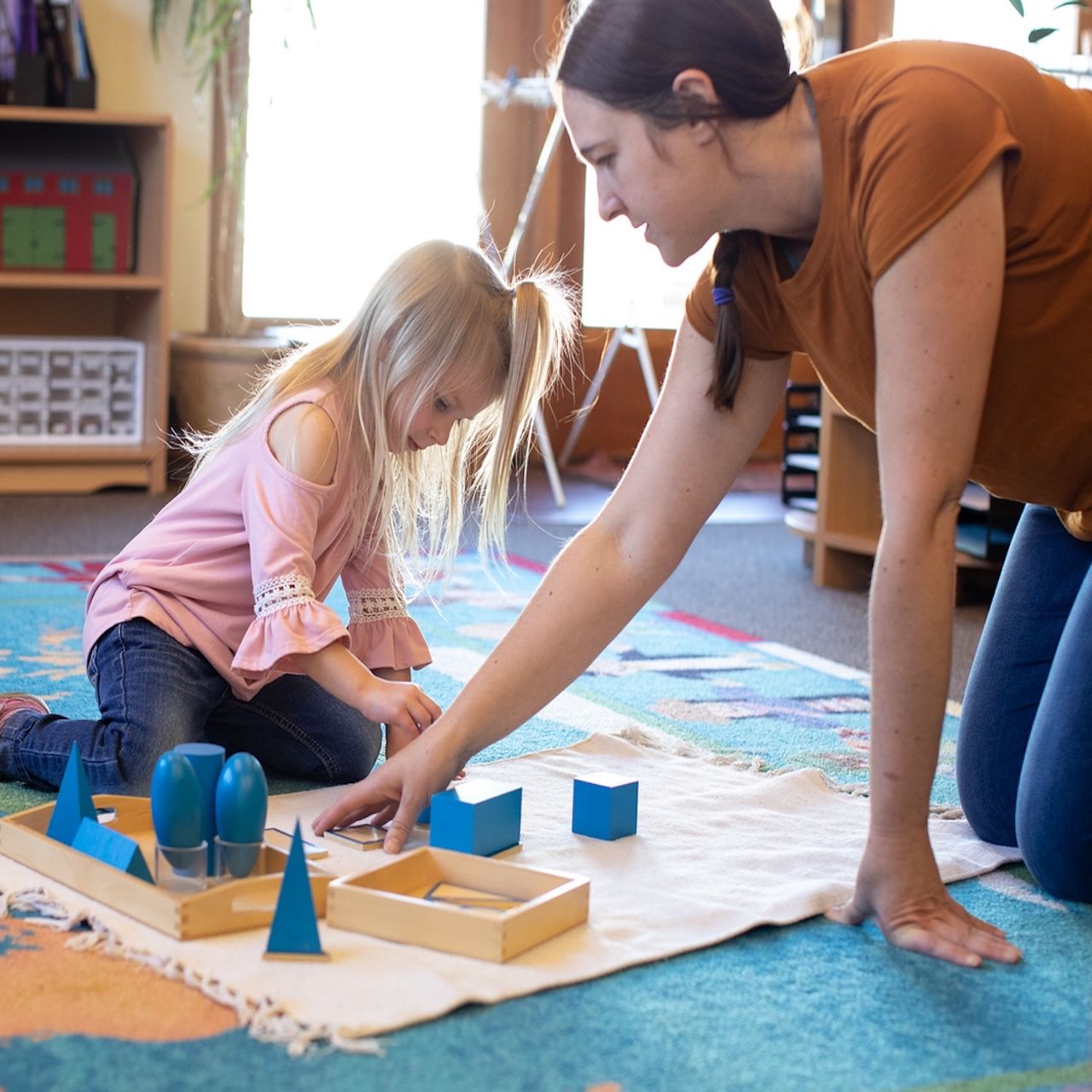
Guide: You’ll notice we don’t usually say "teacher." We use the term "Guide" because it more accurately describes the adult’s role: observing the child and leading them toward the materials they need, rather than standing at the front of a room lecturing.
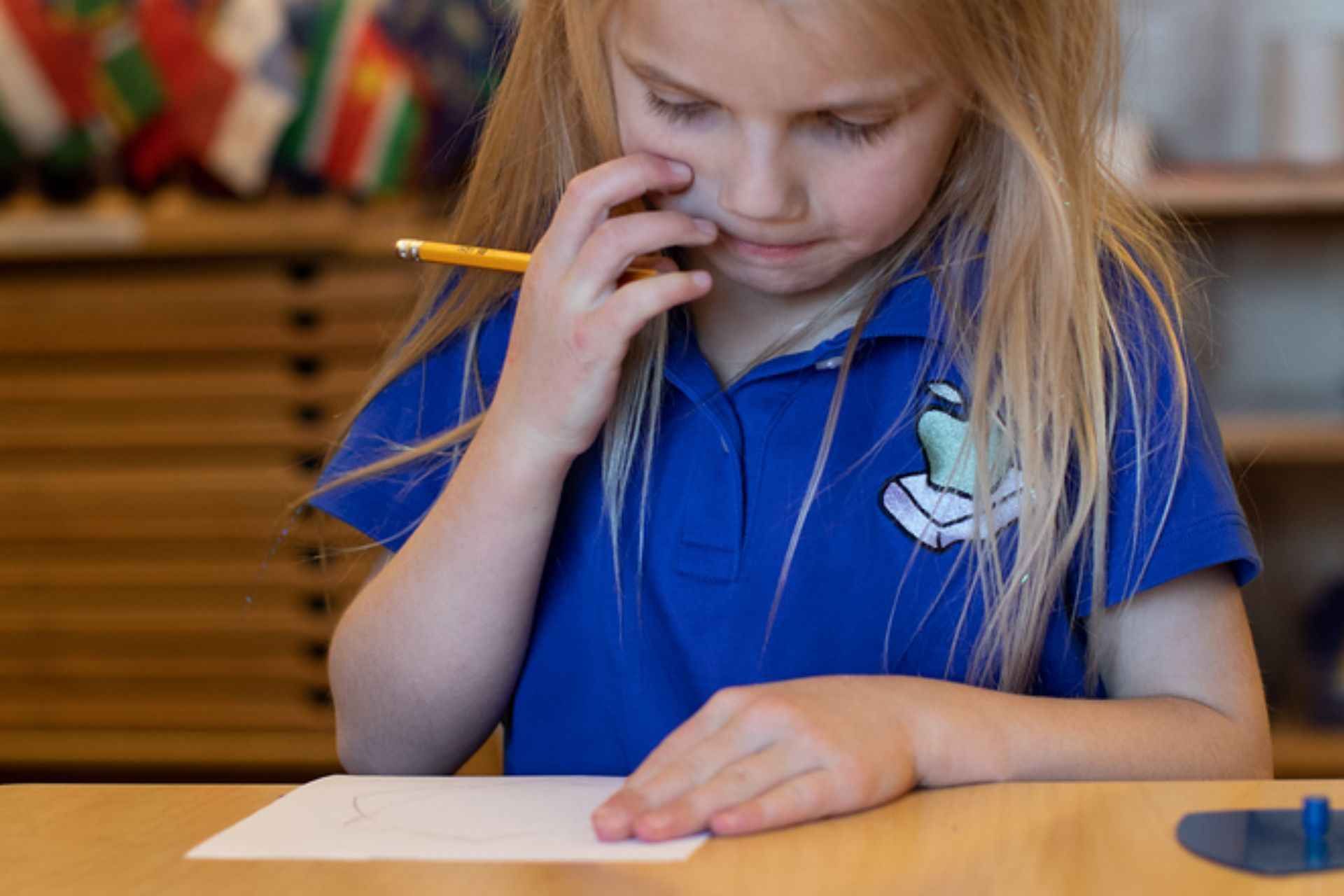
Indirect vs. Direct Preparation: Sometimes a child is working on a skill without even knowing it! For example, when a child in our Primary program uses a metal inset to trace, they are indirectly preparing their hand muscles and pincer grip for the direct act of writing later on.
Isolation: To help a child master a concept, we isolate a single skill. If a child is learning the sounds of letters, we don't worry about their handwriting yet. We focus on one challenge at a time so the child isn't overwhelmed.
Nido: Italian for "nest." This is the beautiful, peaceful name for an infant environment, designed to be a gentle transition from home.
Normalization: This is the "magic" moment in a Montessori classroom. After a period of adjustment, a child becomes "normalized"—meaning they have found their focus, work joyfully, and interact peacefully with their peers.
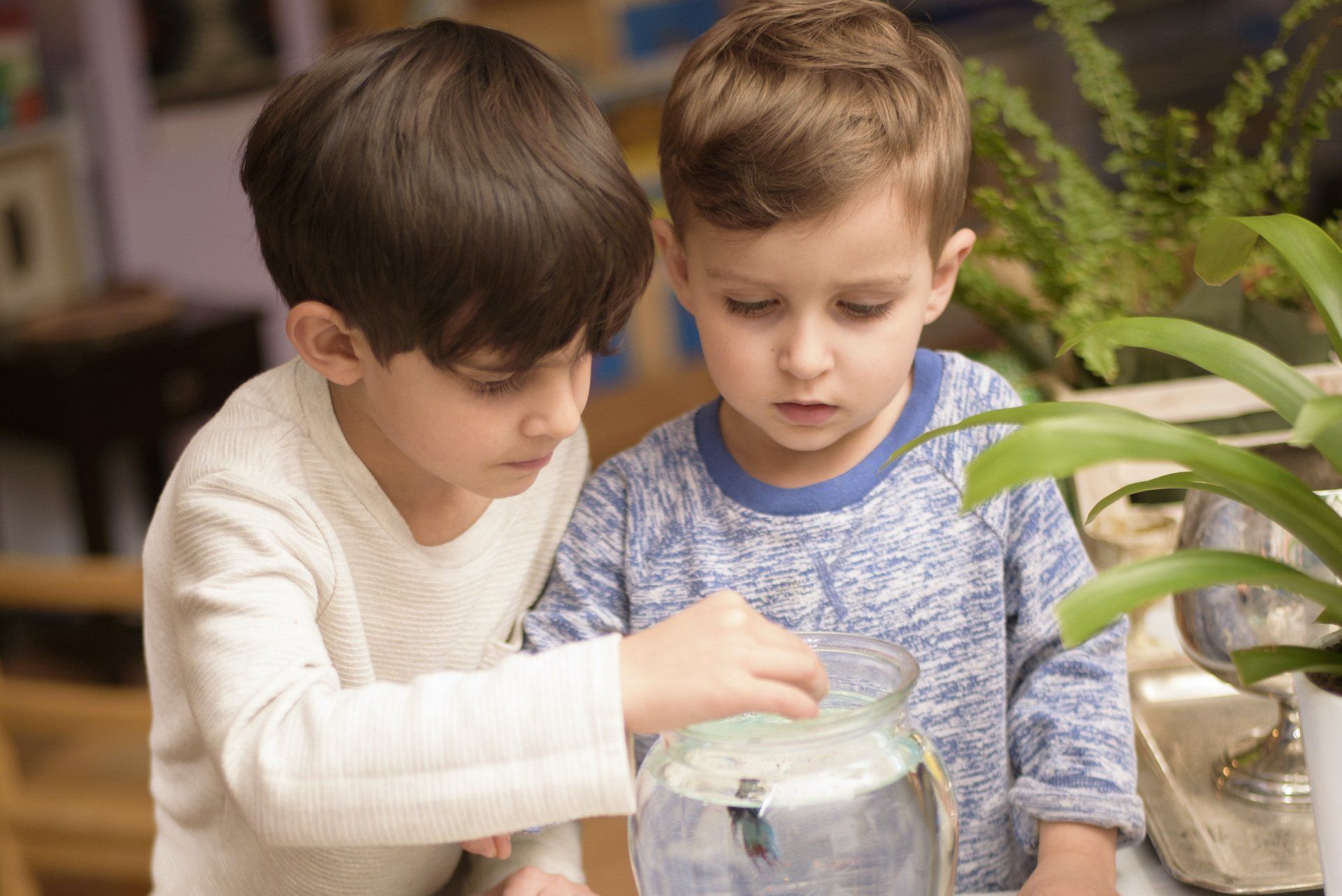
Parallel Play: Common in children under age six, this is when children work or play near each other but are focused on their own individual tasks. It is a natural step before the highly social "collaborative play" of the Elementary years.
Planes of Development: Dr. Montessori identified four distinct stages of growth (0-6, 6-12, 12-18, and 18-24). Each "plane" has different psychological and physical needs, and our programs at Waypoint are structured specifically to meet them.
Practical Life: These are "real life" activities like sweeping, food preparation, or buttoning a coat. At Waypoint, we value these just as highly as math or language because they build concentration, coordination, and independence.
Prepared Environment: This is what we call our classrooms. Our guides spend hours intentionally arranging the furniture and materials so that the room itself acts as a teacher, allowing the child to work with minimal adult intervention.
Sensitive Period: A window of time in a child's development when they are intensely interested in and capable of learning a specific skill (like language or order). When a child is in a sensitive period, learning that skill feels like "play."
Sensorial: Especially in the first plane (0-6), children learn through their senses. Our sensorial materials help them categorize and refine what they see, smell, touch, hear, and taste.
Work: In our halls, you’ll hear us ask, "What work are you choosing today?" To a child, "work" and "play" are the same thing. We call it work to show respect for the effort and deep concentration the child is putting into their own development.
Work Cycle: This is a long, uninterrupted block of time (usually 2–3 hours) where students can dive deep into their chosen tasks. This allows for the kind of "flow" and focus that is often broken in traditional schedules with frequent bells and transitions.
Do you have a favorite Montessori term that we missed? Or is there a phrase you’ve heard around the campus that you'd like us to explain? Let us know—we love talking about the "why" behind the Waypoint experience!
You might also like